
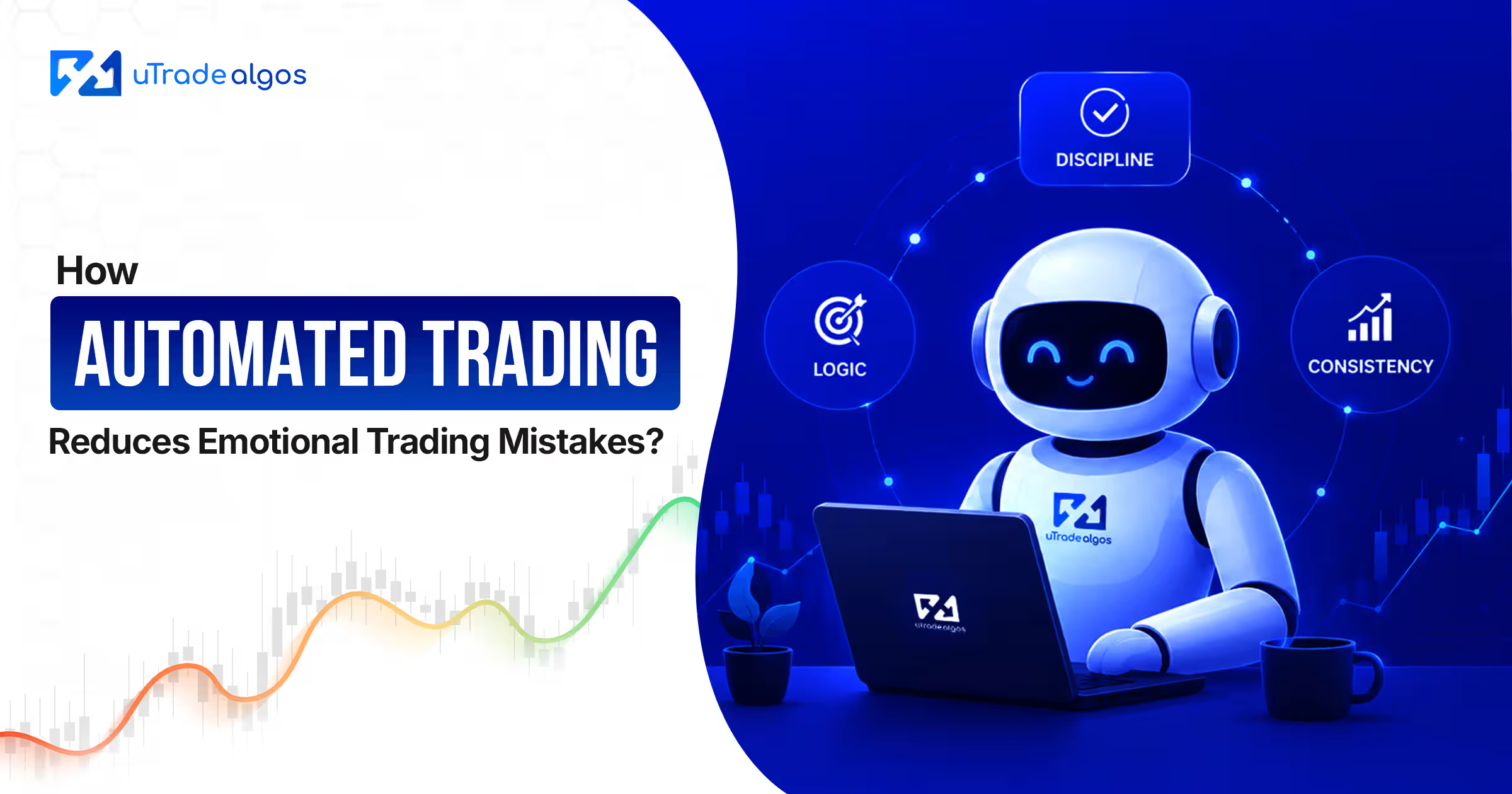
Introduction
Emotional trading is often considered the “silent killer” of retail portfolios, with studies suggesting that emotions, rather than technical flaws, drive 70–85% of retail losses. It occurs when traders abandon logical, data-driven plans and make impulsive decisions based on fear, greed, and panic.
Traders today can earn more profits, but only if they follow the right strategy instead of relying on emotional trading.
One thing is clear—traders want more control, not more stress. While markets like NSE National Stock Exchange and BSE Bombay Stock Exchange offer endless opportunities, many traders still struggle with the same old problem: emotional decision-making.
Imagine everything is perfectly aligned—your analysis, market trends, and indicators all point toward profit, but a sudden emotional impulse makes you exit early or hesitate
This is exactly where most traders lose their edge. Without a clear, disciplined approach, even the best strategy can fail. That’s why more traders today are turning toward automated trading systems, because algo trading reduces emotional influence and helps the trader, whether a beginner or an expert, trade with logic instead of fear.
What is Emotional Trading?
Emotional trading is when you make buying or selling decisions based on feelings like fear or greed instead of logic, data, and strategy. It’s no surprise that traders today are actively searching for questions like:
“How to control fear and greed in stock market trading?”
“What are the common signs of emotional trading behavior?”
“Can trading bots help avoid emotional trading decisions?”
“Which platforms offer tools to reduce emotional trading mistakes?”
The answer, or we can say the solution, lies in Automated Trading—using a proper strategy backed by data, where decisions are driven by logic, not emotions.
When Tony Stark visited Wall Street, he was struck by how chaotic and overwhelming the financial markets were. This reflects what many traders experience daily.
But the real chaos isn’t just in the market—it’s inside the trader’s mind, driven by fear, greed, and overthinking.
This is where automated trading changes the approach, replacing emotional reactions with logic, structure, and data-driven decisions.

What is Automated Trading
Automated trading is a method where traders set predefined rules and strategies, and a computer system automatically executes trades based on those rules without manual intervention during execution.
This is exactly the approach followed by some of the most successful traders globally, who rely on data and automation to maintain consistency and eliminate emotional decisions.
For example, Jim Simons, a renowned trader, used data-driven, automated trading strategies to achieve consistent results and profitability, generating approximately 66% average annual returns (before fees).
Suggested Reading:
Learn the Difference Between Algo Trading vs Manual Trading
How Automated Trading Reduces Emotional Mistakes?
Rule-based execution
Trades are executed based on predefined strategies and conditions, which removes the need for on-the-spot decision-making and avoids impulsive actions.
Eliminates fear and greed
Automated systems don’t feel emotions, so they won’t panic during market drops or exit profitable trades too early out of fear.
Ensures discipline
Since trades only happen when specific criteria are met, traders avoid overtrading or entering positions without proper confirmation.
Consistent risk management
Features like stop-loss, position sizing, and profit targets are applied automatically, ensuring losses are controlled and rules are always followed.
No hesitation or second-guessing
Trades are executed instantly when conditions are met, preventing delays caused by doubt or overthinking.
Reduces stress and fatigue
The system monitors the market continuously, so traders don’t need to watch charts all day, reducing mental exhaustion and stress.
Backtested strategies
Strategies are tested on historical data beforehand, which builds confidence and reduces the urge to change plans during short-term market fluctuations.
Emotions ruin more trades than bad strategies ever will. Want to see how automated trading solves this? We’ve broken it down in our podcast.
Watch the complete podcast here
What are the Negative Effects of Emotional Trading?
- Impulsive decisions & overtrading: Traders enter or exit trades too quickly without proper analysis, leading to losses and extra costs.
- Revenge trading: After a loss, traders try to recover money quickly by taking bigger risks—often leading to even bigger losses.
- Holding losses & exiting profits early: Fear makes traders hold losing stocks too long, while greed or panic makes them book profits too early.
- Overconfidence: A few wins can make traders take bigger risks without a proper plan or strategy, which can wipe out their gains.
Even a few of the most successful traders in history who earned massive profits have faced the downside of emotional trading and failing to follow their own trading rules properly. - Decision paralysis: Too much fear or confusion can stop traders from taking action at the right time.
- Stress and burnout: Constant emotional ups and downs can lead to anxiety and mental exhaustion.
Common psychological mistakes:
- Herd mentality: Following others instead of your own strategy
- Confirmation bias: Only looking at information that supports your belief
- Loss aversion: Avoiding losses so much that it leads to worse decisions
What are the Benefits of Automated Trading?
- Speed and efficiency: Trades are executed instantly, reducing delays and the risk of price changes (slippage).
- No emotional decisions: Automated Trading removes fear and greed, helping traders avoid impulsive and irrational actions.
- Backtesting strategies: Traders can test their strategies on past market data before using real money, improving confidence and accuracy.
- 24/7 monitoring: Systems can track markets and execute trades continuously, even when you’re not actively watching.
- Consistency and discipline: Trades follow predefined rules, ensuring proper entry, exit, stop-loss, and risk management every time.
- Better diversification: Multiple trades and strategies can be managed at once, helping reduce overall risk.
- Fewer manual errors: Since trades are executed automatically, mistakes like entering the wrong price or quantity are avoided.
Suggested Reading: The Impact of Artificial Intelligence on Algorithmic Trading
Note: While automated trading offers many benefits, it still requires regular monitoring to handle potential technical issues such as connectivity problems or software bugs. Always rely on trusted platforms and keep proper risk management in mind.
Also Read: Importance of Risk Management in Algo Trading
Conclusion
If you’re still trading by letting your emotions lead, you’re risking your potential. Every impulsive decision driven by fear or greed can cost you real opportunities to earn profits.
Smarter traders today are shifting from emotional trading to automated trading to build consistency and discipline.
It often starts with one simple question: Which is the best platform for automated trading in India?
There are several platforms available, and tools like uTrade Algos help traders move toward a more structured and data-driven approach. With AI-powered automated trading, you can backtest strategies, deploy them, and let the system execute trades with precision. Whether you’re a beginner or an experienced trader, it helps reduce emotional mistakes and improves consistency over time.
Start smart trading with uTrade Algos Today!
Frequently Asked Questions (FAQs)
What are the main risks of Automated Stock Trading?
Automated trading offers many benefits, but it also has risks like technical issues, incorrect strategy setup, and sudden market changes. That’s why regular monitoring and using well-tested strategies are important.
Platforms like uTrade Algos help traders trade smarter by offering pre-built strategies that have been used by large financial institutions and experienced traders, and are approved by exchanges
- Backtest, forward test, and deploy strategies
- Build and deploy your own strategies
- Use AI to create and optimize trading strategies
Is Automated Trading better than manual trading?
Automated Trading is often more consistent than manual trading because it follows fixed rules and avoids emotional decisions. While manual trading depends on human judgment, Automated Trading focuses on discipline and strategy.
How does Automated Trading improve trading performance?
Automated trading improves performance by executing trades faster, reducing errors, and sticking strictly to a proven strategy without emotional interference.
Can Automated Trading help increase profits?
Automated trading helps you trade smarter by capturing opportunities in milliseconds—something you usually miss while trading manually. It also saves time and reduces emotional decisions, giving you a practical edge. Profits still depend on market conditions and the strategies used.
How does Automated Trading improve accuracy in trading?
Automated Trading increases accuracy by executing trades exactly as planned, without hesitation or manual errors like wrong price entry or delayed decisions.
Reputable providers of Automated Trading Software for Indian markets
There are several trusted platforms available, but traders should look for reliability, strong risk management tools, and ai-based platforms for easy automations. Platforms like uTrade Algos are designed to simplify automated trading with user-friendly tools and flexible strategies.
How is AI changing decision-making in trading and finance?
If you’re interested in understanding how technology and AI are shaping human decisions—not just in trading but in the real world—books like How Carbon Met Silicon and Humans Entered the AI Black Hole offer deeper insights into the evolving relationship between humans and machines.



.svg)





