
Introduction
When your algorithm starts trading in real market conditions, things change. Slippage, latency, unexpected volatility, and execution gaps can impact performance. That’s why managing a live algo trading portfolio is not just about automation—it’s about control, monitoring, and adaptability in a smarter way.
Whether you’re running one strategy or multiple, this guide will help you:
- Manage risk effectively with structured controls
- Enable more consistent performance through disciplined execution
- Give you greater control during volatile market conditions
Algorithmic trading is no longer limited to hedge funds or Wall Street desks. Retail traders across India, the US, and Southeast Asia are running live algo strategies on everything from Nifty 50 futures to crypto pairs. The opportunity is real, but so are the risks of managing multiple strategies without a clear system.
This guide is for you, whether you are just deploying your first strategy or actively managing a basket of algos across NSE, BSE, or global exchanges.
What Does "Managing a Live Algo Strategy" Actually Mean?
Managing a live algo strategy means actively overseeing your automated system, not just letting it run blind. It includes monitoring execution quality, enforcing risk rules, reviewing performance regularly, and knowing exactly when to intervene and when to step back.
Many traders assume "automated" means "hands-off." That's the first and most dangerous misconception. Automation removes emotion from execution; it does not remove the need for human judgment in oversight.
Bottom line: Managing live algos refers to the process of:
- Monitoring active strategies
- Controlling risk exposure
- Adjusting or stopping strategies when needed
- Ensuring proper capital allocation
Most traders spend weeks perfecting their strategy logic — entry signals, exit rules, indicators. But when it comes to managing that strategy live, they improvise. That improvisation is where capital gets lost. The traders who last are the ones who treat their management process with the same rigor as the strategy itself.
"I don't think you can get there by trying to outthink the market. You need a system." — Richard Dennis, Creator of the Turtle Trading System
That system is not just your algo. It's your risk rules, your review schedule, your kill switch (Panic control) conditions, your capital allocation logic. Everything that happens after you hit deploy.
5 Best Practices to Manage Live Algo Trading Strategies
1. Always Have a Kill Switch — and Know When to Use It
A kill switch is your emergency brake. It stops all active orders and flattens open positions instantly. Every live algo system must have one—and it must be accessible within seconds, not minutes.
More importantly, define your trigger conditions before you need them. Don’t decide in the moment. Pre-set the exact scenarios where you will halt a strategy, such as:
- A daily loss limit being hit
- A sudden spike in slippage
- Unexpected news-driven volatility
- Technical or execution issues
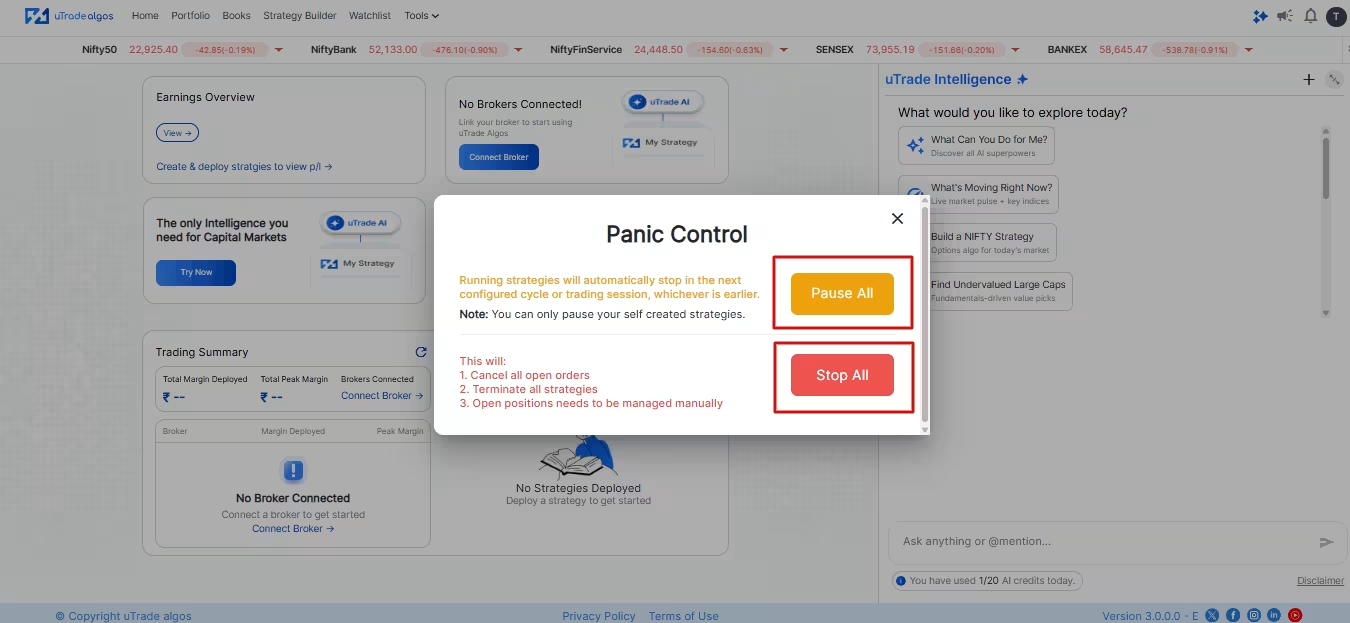
Many modern platforms make this process easier. For example, uTrade Algos provides a built-in Panic Control feature that allows you to act immediately when needed.
- Click on your Profile icon in the top right corner, then hit Panic Control.
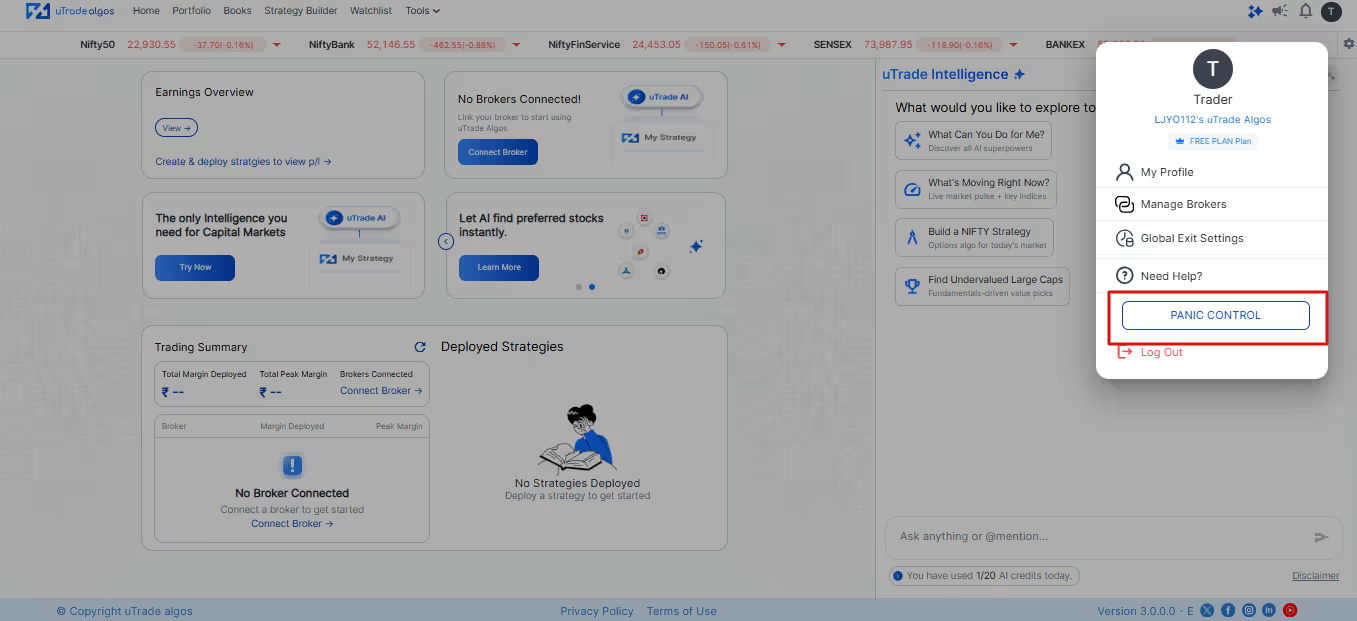
- In a single click, you can pause all running strategies or shut them down completely.
2. Define Risk Rules Before Going Live — Not After
Before you run your strategy with real money, clearly decide how much risk you are comfortable taking.
This includes setting limits like how much you can lose per trade, the maximum loss you can handle in a day, how big each trade should be, and how much total capital you will use.
Think of it like setting rules before playing a game.
For example, you might decide:
“If I lose ₹1,000 in a day, I will stop trading,” or “I will only use 20% of my capital in one strategy.”
Traders who don’t set these rules in advance often change them during losses. This is how small losses slowly turn into much bigger ones.
3. Monitor Execution Quality Daily
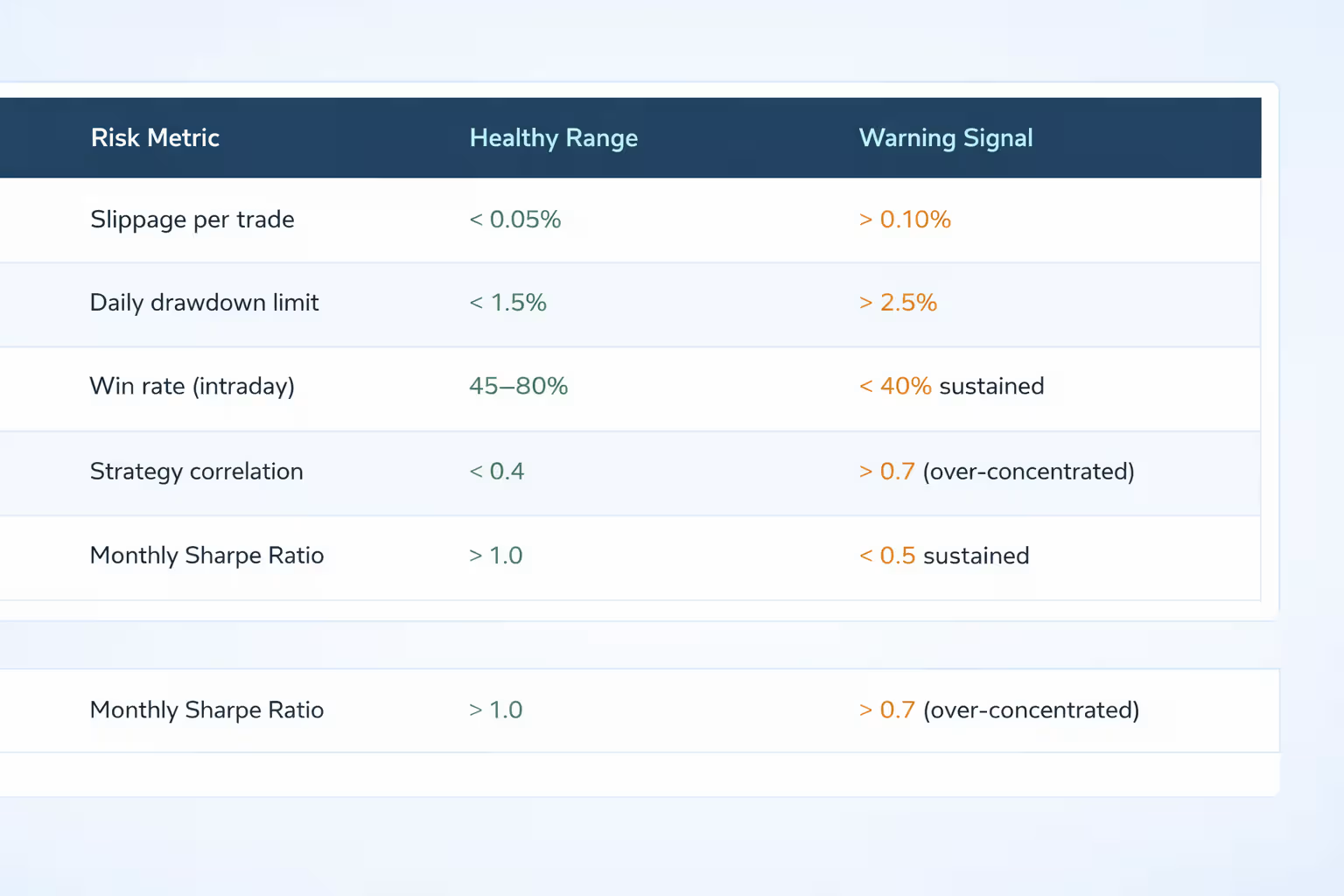
When you test a strategy, you get expected results—but live trading is different. The difference between the expected price and the executed price, called slippage, can affect your profits.
It’s important to check whether trades are executed close to expected prices because if this gap grows, your strategy may underperform. You might need to adjust your order type or review the strategy.
This is where uTrade Algos shine. You can set rules, stop-losses, and basic parameters once, and the system manages your trades automatically—even while sleeping, eating, or busy with other work.
You don’t have to intervene constantly. Out of curiosity or for occasional checks, you can still monitor performance, but the platform ensures your strategy runs reliably and efficiently.
With uTrade, you focus on decisions, and the system handles execution smartly.
4. Separate Capital Per Strategy
One common mistake in algo trading is running multiple strategies using a single pool of money. If one strategy loses, it affects all the others, and it becomes hard to tell which strategy is actually performing well.
A better approach is to allocate a fixed amount of capital to each strategy. Check these allocations regularly—say, once a month. If a strategy is underperforming in live trading, reduce its allocation. For strategies that show consistent results, increase their allocation gradually.
Suggested Read: The Importance of Real-Time Data in Algo Trading Software
5. Paper Trade New Strategies Before Deploying Capital
Before you invest actual money in a new strategy, try it out first in a practice mode called paper trading. This lets you see how the strategy would perform in real markets without risking your money.
Run it alongside your current portfolio for at least 30 days to get a clear idea of how it behaves.
Compare what actually happens in real-time with what the strategy predicted during backtesting. Pay attention to:
- Slippage: The difference between the price you expect and the price you actually get.
- Fill rates: How often your orders are fully executed.
- Volatile sessions: Times when the market moves fast, like news events, where predictions may be less accurate.
This helps you understand if your strategy works in real conditions before using real money.
On uTrade Algos, you can forward-test your strategy whether you are:
- Running a pre-built, original strategy
- Building and testing your own custom strategy
- Creating a strategy with AI using uTrade Intelligence
Common Mistakes Traders Make
Many traders in India, whether beginners or experienced, often make mistakes that can be easily avoided. Some of the most common ones include:
Running Too Many Strategies
More isn’t always better. Having too many strategies can dilute your focus and make it harder to manage risk effectively.
Ignoring Risk Limits
Without predefined limits, losses can grow quickly and get out of control.
Emotional Interference
Making decisions based on emotions—like stopping a strategy too early or letting losses run—can hurt overall performance.
No Portfolio View
Tracking each strategy separately without considering the total portfolio exposure can lead to unexpected risks.
Suggested reads: How to Manage Risk in Algo Trading (Proven Framework)
Risk Management's Impact on Algo Trading Strategies
Conclusion
Managing a live algo strategy is not a passive activity. The algorithm handles speed and consistency of execution — but the judgment, discipline, and oversight are entirely yours. Define your risk before you go live. Monitor execution quality daily. Review performance on a schedule. Know when to pause and when to trust the system.
Whether you're trading Nifty options in Mumbai, running momentum strategies on BSE midcap stocks, or managing a multi-strategy portfolio across global markets — the principles are the same. Discipline is the real edge.
Frequently Asked Questions (FAQs)
How do I manage a live algo trading strategy effectively in India?
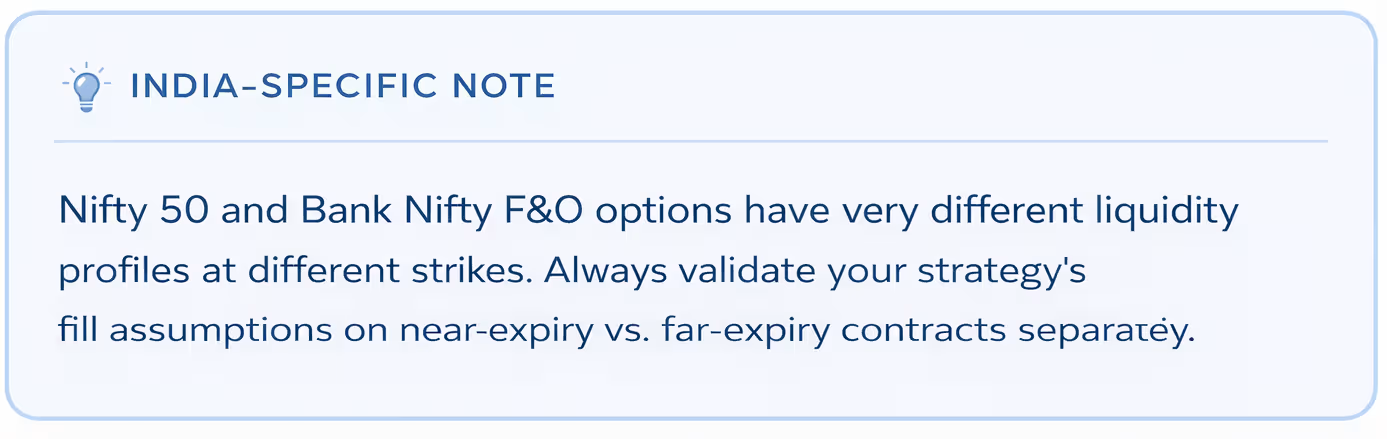
Effective management starts with pre-defined risk rules, a working kill switch, and daily monitoring of execution quality. In India specifically, account for NSE/BSE liquidity patterns, SEBI margin regulations, and high-volatility windows around market open, close, and major macro events like RBI policy meetings or the Union Budget.
What are the biggest mistakes traders make with live algo strategies?
The most common mistakes are: assuming automated means hands-off, not defining risk limits before going live, making reactive changes after a few bad days, running multiple strategies against a single pooled account without isolation, and ignoring slippage until it's already destroying performance.
What is the difference between paper trading and backtesting for algo strategies?
Backtesting runs your strategy on historical data to estimate past performance. Paper trading runs it in real-time with simulated capital. Paper trading is far more valuable because it captures real-world execution friction — live slippage, partial fills, API latency, and current liquidity — that backtests cannot replicate accurately.
How do Indian market conditions affect algo strategy performance vs global markets?
Indian markets have distinct characteristics: intraday volume spikes at open and close, sensitivity to FII/DII flows, circuit breaker rules, and SEBI-specific margin and lot-size regulations. Strategies optimized for US or European markets often need significant adjustment before performing reliably on NSE or BSE. Always backtest and paper trade on Indian data before deploying capital.
Can beginners manage live algo strategies without coding knowledge?
Yes. Platforms like uTrade Algos provide a marketplace of pre-built strategies developed by experienced quants, with customizable risk parameters and real-time monitoring — no coding required. Coding knowledge helps you build and modify strategies, but it is not a prerequisite for getting started with live algo trading in India.
What are the top 7 best algo trading softwares in India?
There are countless trading platforms available for traders in India, each offering different features, tools, and capabilities. Choosing the right algo trading software can make a significant difference in efficiency, execution speed, and overall trading performance.
Suggested read: What are the top 7 best algo trading softwares in India





.svg)





