
.avif)
Introduction
If you have started learning about the stock market, you have probably heard terms like large-cap, mid-cap, and small-cap companies. These categories are used to classify companies based on their market capitalisation (market cap) — the total value of a company in the stock market.
Understanding the difference between large-cap, mid-cap and small-cap companies can help investors choose stocks or mutual funds according to their risk appetite and investment goals.
What is Market Capitalisation (Market Cap)?
Market capitalization means the total market value of a company’s outstanding shares.
Market Capitalisation formula is:
Market Cap=Share Price×Total Outstanding Shares
For example:
- Company share price = ₹500
- Total shares = 10 crore
Market cap = ₹5,000 crore
A company’s market capitalisation determines whether it is classified as a large-cap, mid-cap, or small-cap company.
According to the classification framework introduced by SEBI (Securities and Exchange Board of India) in 2017:
Large-cap companies: Ranked 1–100 by market capitalisation
Mid-cap companies: Ranked 101–250
Small-cap companies: Ranked 251 onwards
Before 2017, there was no clear rule in India for classifying companies as large-cap, mid-cap, or small-cap. On October 6, 2017, SEBI (Securities and Exchange Board of India) introduced guidelines to categorise companies based on their market capitalisation (market cap). And this classification is commonly used by investors, brokers, and mutual funds.
What are Large Cap, Mid Cap, and Small Cap?
Market cap shows the total value of a company in the stock market. These categories help investors understand a company’s size, growth potential, and risk level.
Large-Cap Companies: Bigger and More Stable
Large-cap companies are the top 100 companies in India by market capitalisation, according to SEBI classification. These are well-established businesses with a strong market presence and relatively stable performance.
Large-cap stocks are often preferred by investors looking for lower risk and steady growth.
Common features of large-cap companies:
- More stable during market fluctuations
- Lower risk compared to smaller companies
- Strong financial history
- Suitable for conservative investors
Examples of large-cap companies in India:
- Reliance Industries
- Tata Consultancy Services (TCS)
- HDFC Bank
- Infosys
These companies are widely followed and usually form part of major indices such as Nifty 50 and Sensex.
Mid-Cap Companies: Balance Between Growth and Risk
Mid-cap companies are ranked 101–250 by market capitalisation. These businesses are usually in the growth stage and may become future large-cap companies.
Mid-cap investments generally offer:
- Higher growth potential than large caps
- Moderate risk
- Better expansion opportunities
Investors looking for a balance between stability and growth often consider mid-cap stocks or funds.
Examples of mid-cap companies in India:
- Indian Hotels Company
- Polycab India
- AU Small Finance Bank
- Mphasis
(Company categories can change over time as market capitalisation changes.)
Small-Cap Companies: Higher Growth, Higher Risk
Small-cap companies are ranked 251 onwards based on market capitalisation. These businesses are relatively smaller but may grow quickly over time.
However, small-cap stocks are often more volatile and carry greater risk.
Small-cap companies are known for:
- High growth potential
- Greater price fluctuations
- Higher risk during market downturns
- Possibility of higher long-term returns
Examples of small-cap companies in India:
(Examples may change over time because companies move between categories.)
- Carysil
- Fine Organic Industries (classification can vary over time)
- Jupiter Wagons
How Can Platforms Like uTrade Algos Help Investors?
Understanding the difference between large-cap, mid-cap, and small-cap companies is only the first step. Investors and traders also need tools to track stocks, analyse market trends, and make informed decisions.
Platforms like uTrade Algos can help by:
- Monitoring stocks across categories: Traders can track large-cap, mid-cap, and small-cap stocks from a single platform.
- Creating watchlists: Investors can group stocks based on risk level or market capitalisation.
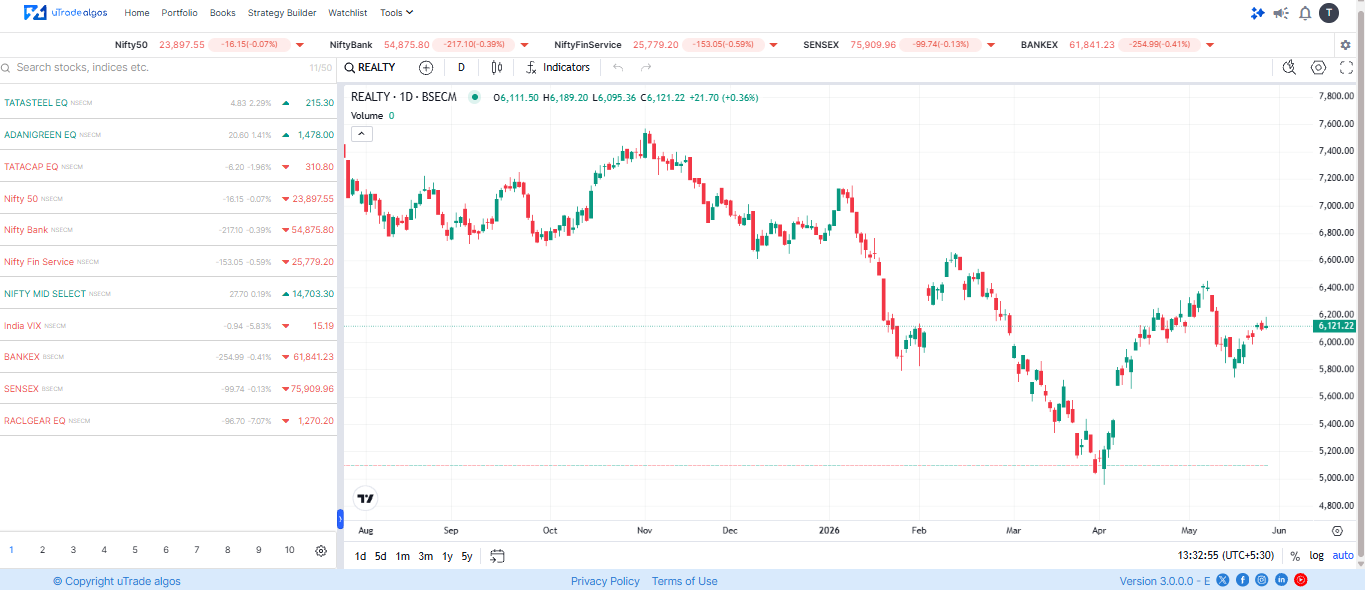
- Using technical analysis tools: Charts and indicators may help analyse price movements and market trends.
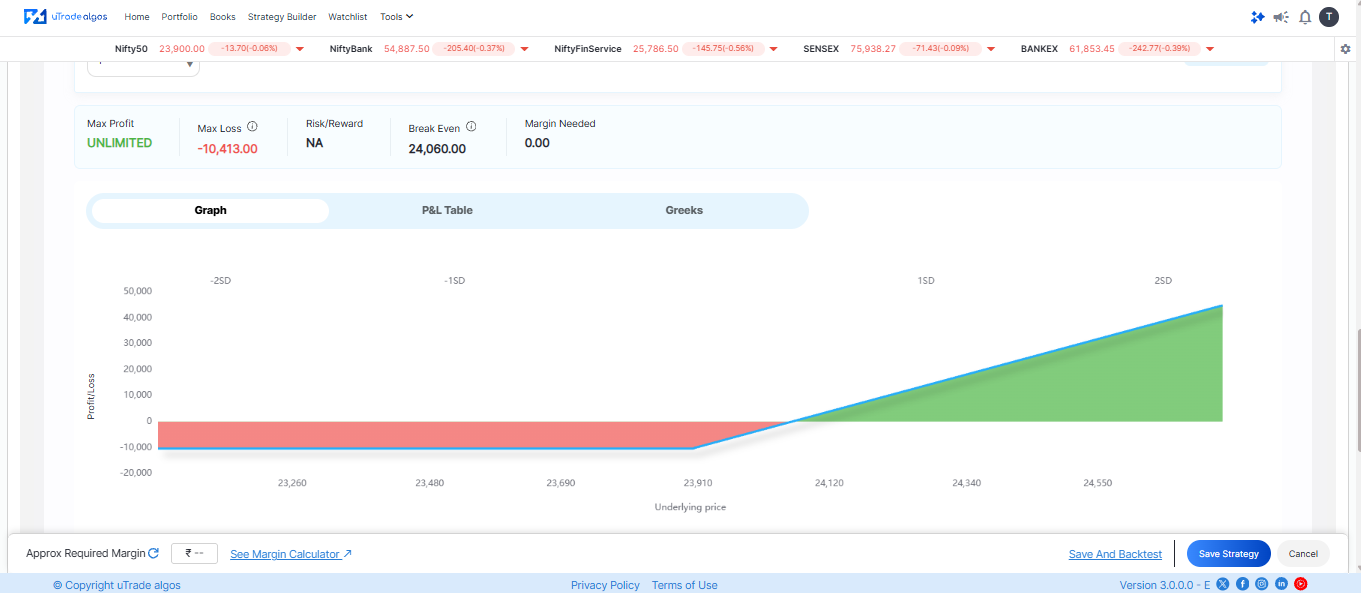
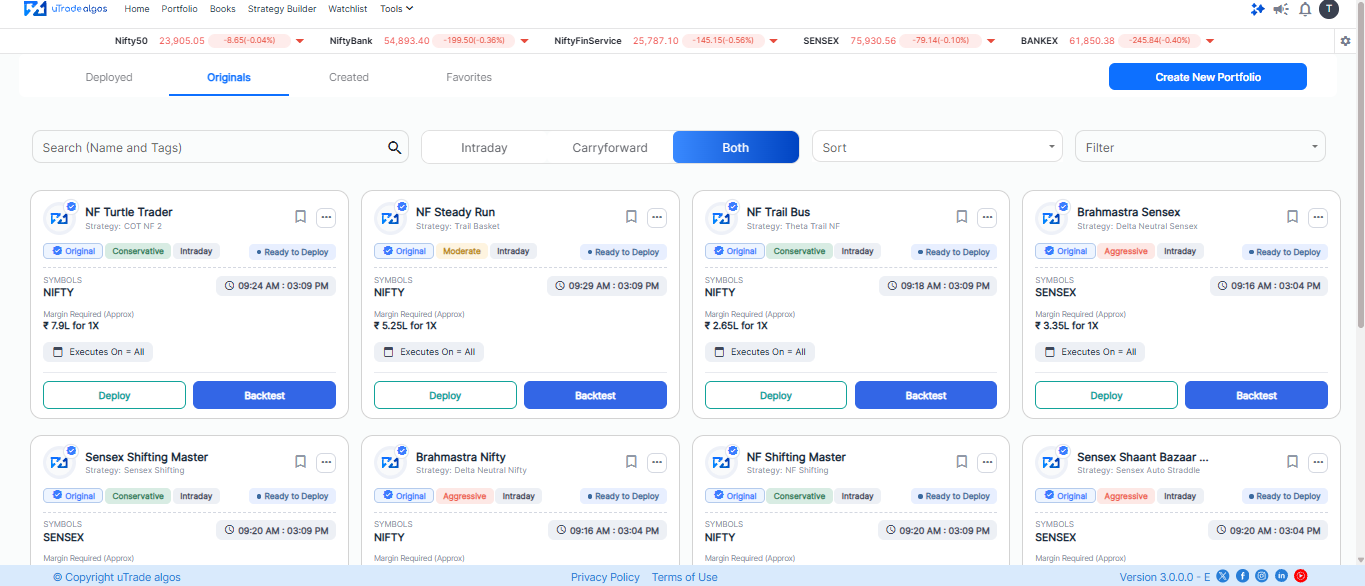
- Automating strategies: Algorithmic trading tools can execute predefined strategies based on conditions set by the user.
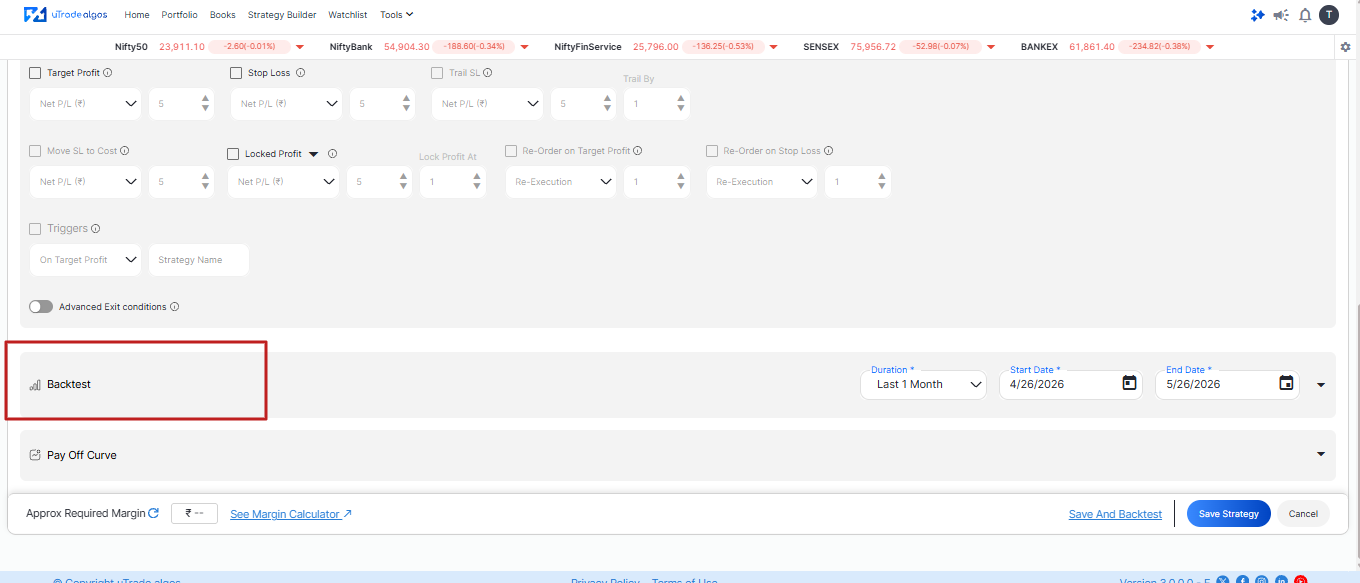
- Backtesting strategies: Traders can test strategies on historical data before applying them in live markets.
- Reducing emotional decisions: Automation can help avoid impulsive buying or selling during market volatility.
Suggested read:
How Automated Trading Reduces Emotional Trading Mistakes?
For example, a beginner investor focusing on large-cap stocks for stability may use tracking tools differently from a trader looking for opportunities in more volatile mid-cap or small-cap stocks.
However, trading platforms are tools — understanding risk, diversification, and market behaviour remains equally important.
Conclusion
So many traders who are just starting their investment journey search for questions like: “Which category should beginners choose?”
A simple approach is:
- New investors → Large-cap focused investments
- Moderate risk investors → A mix of large-cap and mid-cap investments
- High-risk investors → Some exposure to small-cap investments
Diversification across large-cap, mid-cap, and small-cap categories can help reduce overall risk.
But remember, the right choice also depends on market conditions, investment goals, and an investor’s experience level.
Large caps give you stability. Mid caps give you growth. Small caps give you higher growth potential — but with higher risk.
You do not have to choose just one. Many experienced investors in India hold a mix of all three. If you are just starting out, you can begin with large caps, add mid caps as you gain confidence, and gradually include small caps for long-term investing through SIPs.
Markets will fall. Stocks will dip. Small-cap and mid-cap investments may feel uncertain at times. But in the long run, time in the market often matters more than trying to time the market.
Frequently Asked Questions (FAQs)
What is the difference between large-cap, mid-cap, and small-cap companies?
The main difference is market capitalisation (market cap). Large-cap companies are the biggest and more established businesses, mid-cap companies are growing firms, and small-cap companies are relatively smaller with higher growth potential but greater risk.
Are large-cap stocks safer than small-cap stocks?
Large-cap stocks are generally considered more stable because they belong to established companies. Small-cap stocks may offer higher growth potential but often come with higher volatility and risk.
Are small-cap funds good for long-term investing?
Small-cap funds can deliver strong returns over long periods, but they also experience larger market fluctuations. They are usually more suitable for investors with a longer investment horizon and higher risk tolerance.
Is a mid-cap mutual fund safe for beginners?
Mid-cap funds usually carry moderate risk. They may suit investors looking for a balance between stability and growth, but they are riskier than large-cap funds.
Why do small-cap and mid-cap stocks fall more during market corrections?
Small-cap and mid-cap stocks often react more strongly to economic uncertainty, rising interest rates, or profit booking because they are generally considered riskier than large-cap stocks.
Can a company move from small-cap to mid-cap or large-cap?
Yes. If a company grows and its market capitalisation increases over time, it can move from small-cap to mid-cap or even become a large-cap company.
.avif)
.avif)
.avif)
.avif)
.avif)
.avif)
.avif)

.svg)





