
.avif)
Introduction
When people start trading or investing, most focus only on profits. But experienced traders know that protecting capital is just as important as earning returns. This is where hedging in share market becomes useful.
Simply put, hedging means creating protection for your investments against unexpected market movements. The stock market is unpredictable — prices can rise or fall due to news, economic events, or sudden volatility. No strategy, indicator, or broker can completely remove risk. That is why traders use hedging as part of risk management.
You can think of hedging meaning in trading like insurance. Insurance does not stop accidents from happening, but it reduces the financial damage if something goes wrong. Similarly, hedging does not guarantee profits or remove losses completely, but it helps reduce potential downside risk.
What is hedging in the stock market?
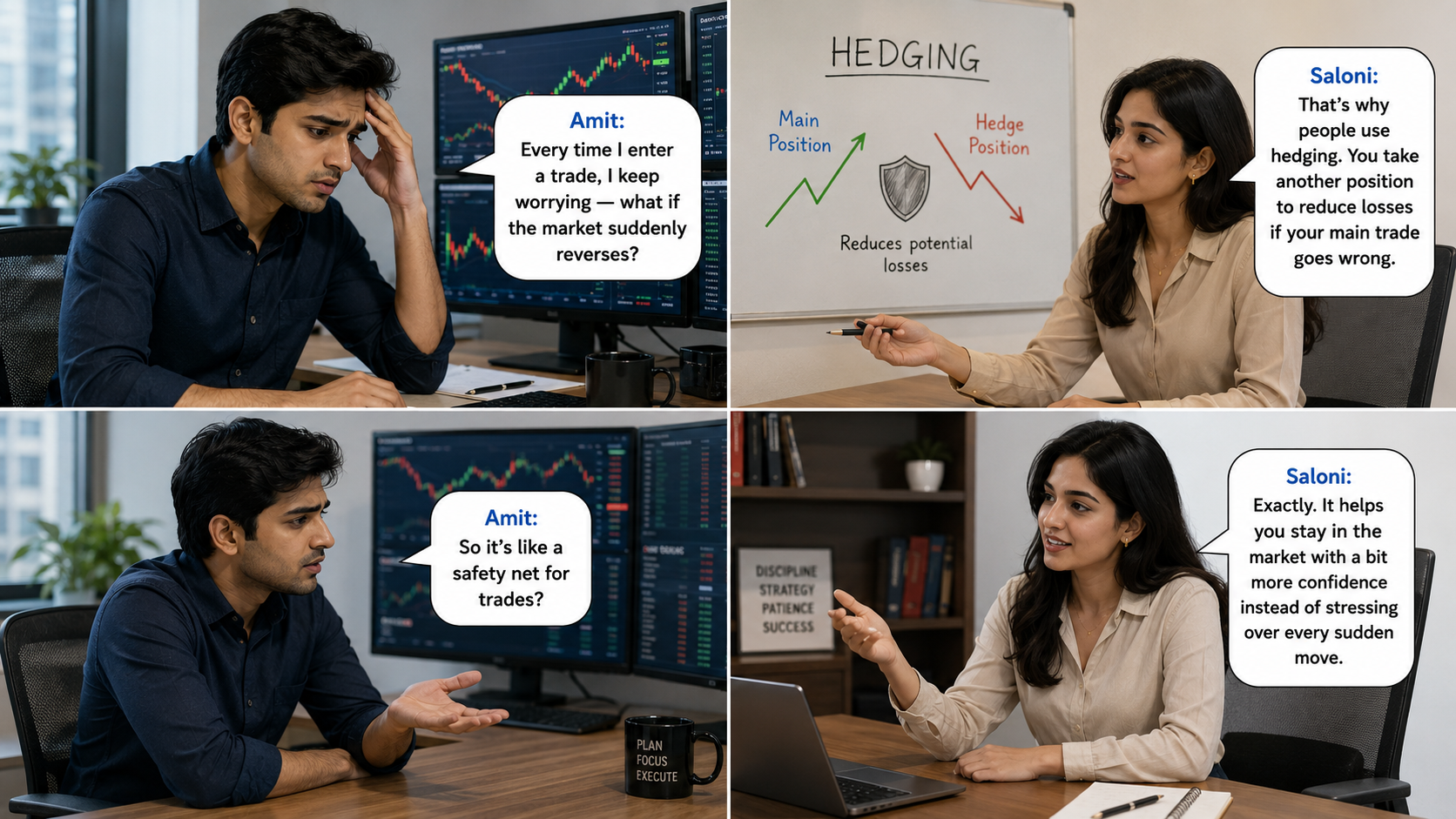
Hedging is a strategy where traders or investors take another position to reduce the risk associated with an existing investment.
In simple words, if one investment starts losing money, the second position may help offset some of that loss. The main purpose of hedging funds or hedging strategies is not to increase profit but to protect capital.
For example:
- An investor owns stocks and fears a short-term market decline.
- They may buy protective options or take an opposite position.
- If the market falls, losses may reduce because of the hedge.
This is why hedging in share market is considered an important risk management technique.
Understand hedging with an example
Many beginner traders ignore risk management because they focus only on finding “winning trades.” But imagine this situation:
Amit believes a technology company will perform well over the next few months. He buys shares worth ₹1,00,000.
A week later, global markets become weak due to unexpected economic news, and tech stocks start falling.
Amit still believes the company is good for the long term, but he worries about short-term losses.
Instead of selling everything, he uses a hedge by buying a protective option or taking another position designed to reduce downside risk.
Now two things can happen:
Scenario 1: Stock price rises
Amit earns profit from his original investment. The hedge may cost a little money, but his overall gains remain positive.
Scenario 2: Stock price falls sharply
His stock investment loses value, but the hedge helps absorb part of the loss.
Without hedging:
Loss = Full impact of market fall
With hedging:
Loss = Reduced impact because protection exists
This is the basic hedging meaning beginners should understand — reducing risk instead of trying to avoid risk completely.
Why is hedging important in trading?
Hedging is useful because markets do not move in one direction forever. Traders use hedging to:
- Protect investments during uncertain markets
- Reduce losses during sudden volatility
- Manage risk in short-term trading
- Stay invested without panic selling
- Improve overall portfolio stability
Good traders focus on preserving capital first. Profit comes later.
Types of hedging commonly used in stock market
Some popular hedging methods include:
1. Options Hedging
Using put options or protective options against stock holdings.
2. Futures Hedging
Taking opposite positions in futures contracts.
3. Portfolio Hedging
Balancing investments across sectors or assets.
4. Pair Trading
Buying one stock while shorting another related stock.
How UTrade helps in creating hedging strategies
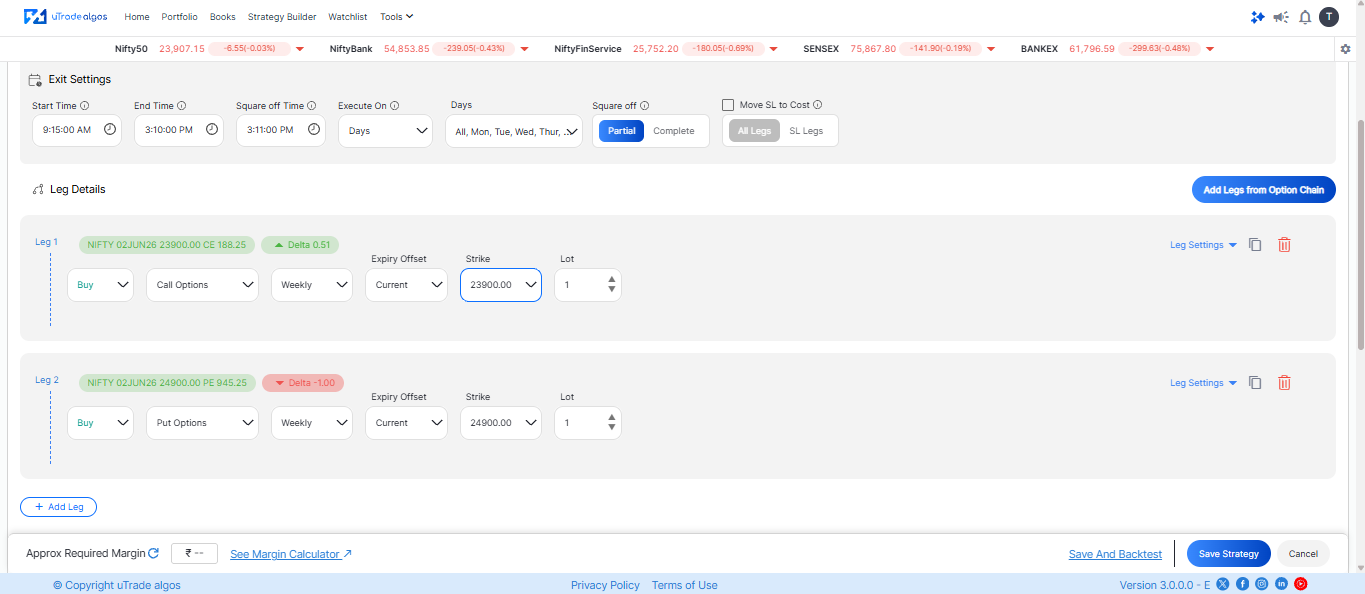
- Strategy Builder support: Easily create hedging combinations by adding different CE and PE positions with customizable parameters like strike price, expiry, option type, and lots.
- Prompt-based strategy creation: Generate a hedging strategy instantly with a single prompt instead of manually building every leg.
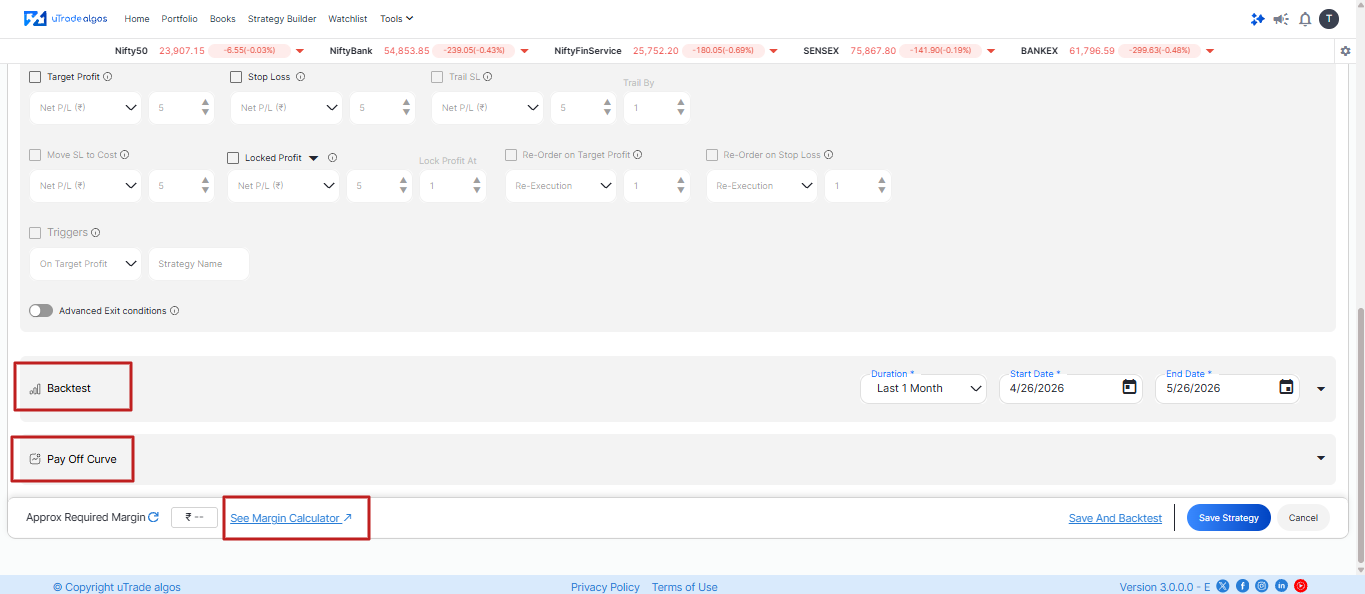
- Backtest your strategies: Test how your hedging strategy would have performed historically before taking a live position.
- Analyse payoff curves & margin requirements: Check potential profit/loss scenarios, payoff charts, and estimated margin usage for better planning.
- Support risk management: Build defined-risk strategies and evaluate them beforehand to improve overall risk management.
Conclusion
Understanding hedging meaning in trading is important because successful investing is not only about earning profits — it is also about controlling losses.
Hedging in share market acts like protection against uncertainty. It helps traders manage downside risk, remain calm during volatile periods, and make more disciplined decisions.
While hedging cannot create 0 hedge or completely remove losses, it can reduce financial damage when markets move unexpectedly. For beginners, learning risk management early is often more valuable than learning complex trading strategies.
Frequently Asked Questions (FAQs)
Does hedging remove all risk?
No. This is a common misunderstanding among beginners. Hedging lowers risk, but it does not eliminate it entirely. Some people even search for terms like 0 hedge, expecting zero-risk trading. In reality, no investment strategy can guarantee completely risk-free returns. Hedging only aims to reduce the impact of unfavorable price movements.
Is hedging legal in the stock market?
Yes. Hedging is a legal and widely used risk management strategy used by traders, investors, institutions, and businesses to reduce market risk.
Can beginners use hedging strategies?
Yes, but beginners should first understand basic risk management. Simple hedging methods are easier to learn than advanced options or futures strategies.
What is an example of hedging in trading?
A trader holding stocks may buy a protective option to reduce losses if stock prices fall. This is one of the common examples of hedging meaning in trading.
Is hedging expensive?
Sometimes. Hedging may involve additional costs such as option premiums or transaction charges. Traders accept these costs in exchange for protection against larger losses.
What is the difference between hedging and diversification?
Hedging reduces risk by taking protective positions, while diversification spreads investments across different assets or sectors to lower overall risk.
.avif)
.avif)
.avif)
.avif)
.avif)
.avif)
.avif)

.svg)





