
Introduction
Algo trading strategies usually don’t fail because the idea or logic is bad. They fail because real-time index movements change market conditions, and the strategy is not able to adapt to those changes. On top of that, poor risk management in automated trading makes things worse and can quickly lead to losses.
And the main question that arises is: How to Track Index Movements While Running Algo Strategies?
Index movements are the heartbeat of the market. Whether you're trading Nifty 50 options, Bank Nifty futures, or stocks from the S&P 500, the broader index is always influencing price behaviour. A strategy that ignores this context is essentially flying blind.
What Is an Index?
A stock market index is a statistical measure that tracks the performance of a selected group of stocks. It represents a segment of the market — a sector, a size category, or the overall economy.
Why Does Index Matter in Algo Trading?
Indices are the Backbone of Algo Strategies. In algo trading, most strategies are either:
- Index-based — directly trading the index itself (Nifty futures, SPY ETF)
- Index-correlated — trading individual stocks or derivatives that move with the index
- Index-neutral — trying to generate returns regardless of index direction (market-neutral strategies)
In all three cases, knowing what the index is doing in real time changes how your algorithm should behave. A mean-reversion strategy on a stock, for example, behaves very differently during a Nifty 50 crash versus a sideways day.
Why Does the Index Matter While Your Algo Runs?
- When stocks move up or down, the index generally moves along with them, as it reflects the overall market direction.
- Your strategy was built with certain market assumptions — the index tells you if those assumptions still hold.
- A strategy that works on a calm day can lose badly on a high-volatility index day.
- The index gives you context — and context changes everything in trading
Suggested Reading: How to Get Started with Indicator-Based Algo Trading: A Beginner’s Guide
How to Track Index Movements While Running Algo Strategies
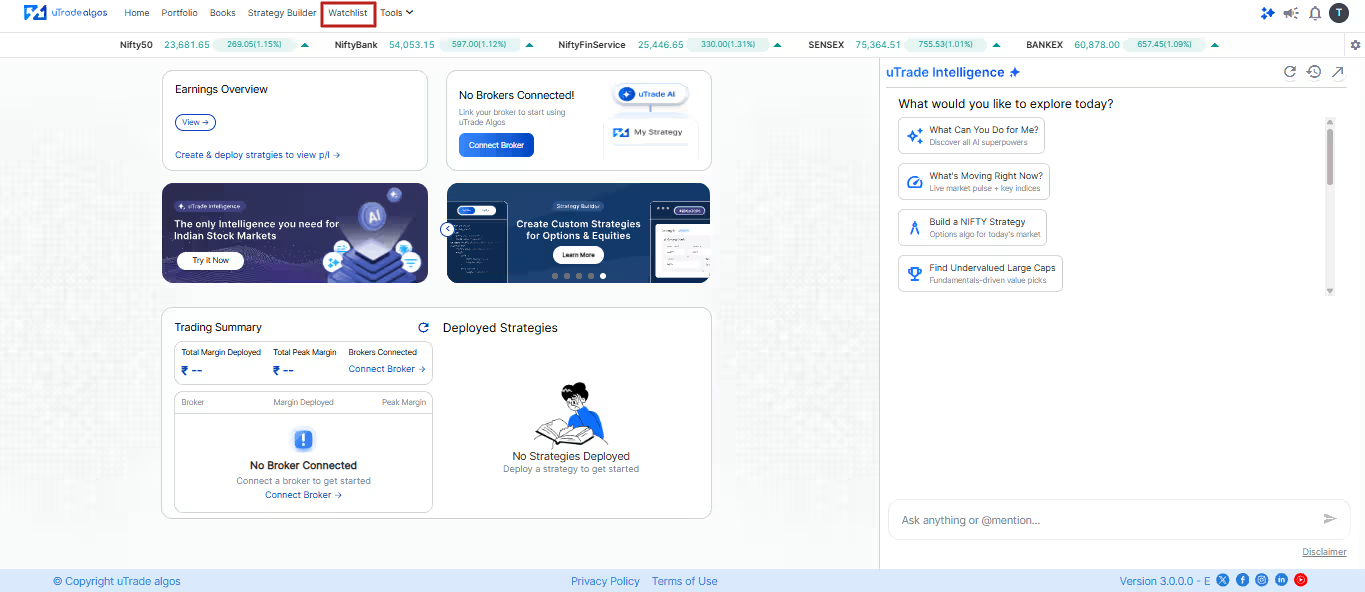
Step 1: Click on Watchlist
Once you run a strategy on uTrade Algos, the algo keeps running automatically based on your set rules, so you do not need to manually monitor or place trades again and again. However, if you still want to track index movements and stay updated with the market, you can simply click on the Watchlist section on the platform.
Step 2: Select the Index You Want to Track
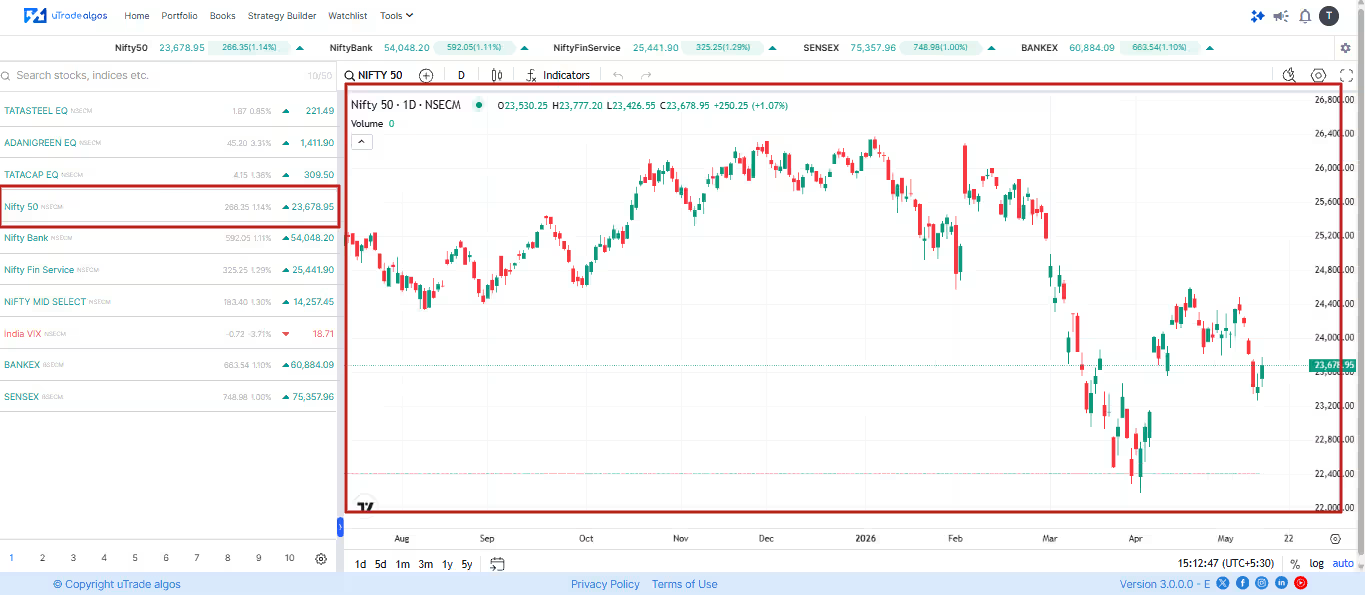
If you are running a strategy based on an index like NIFTY 50, simply select NIFTY 50 from the Watchlist to monitor live index movements and market activity in real time.
Step 3: Track Individual Stocks
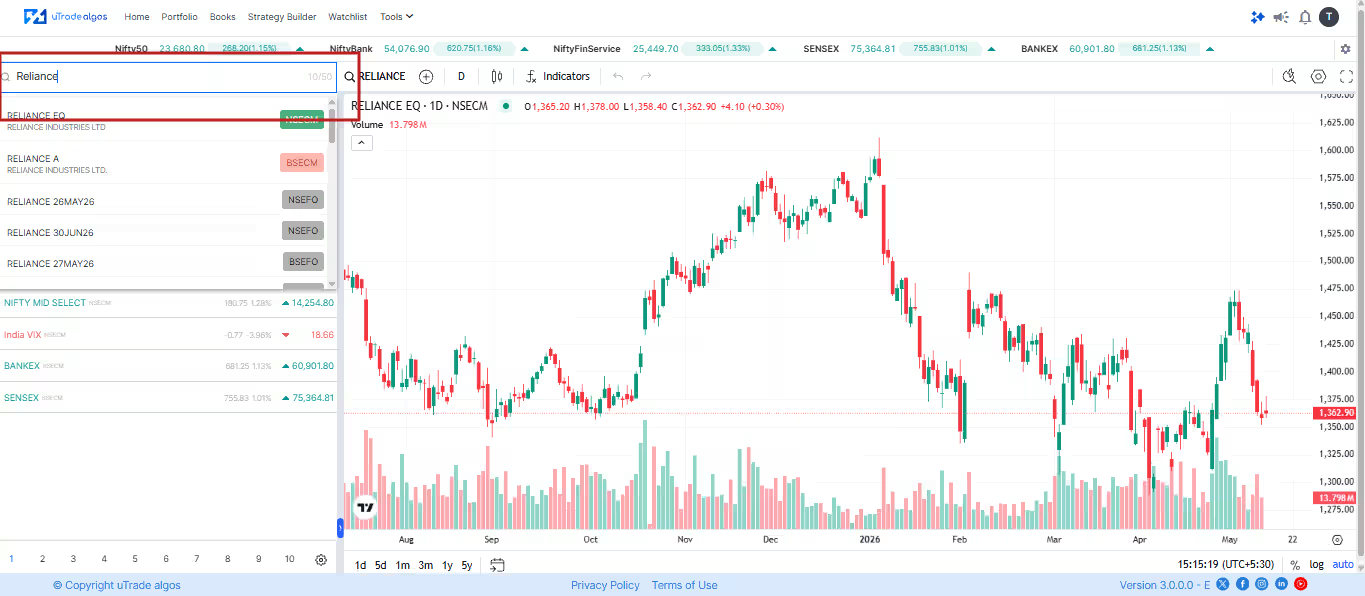
If your strategy is based on a specific stock, such as Reliance, simply search for the stock name and add it to your Watchlist. This helps you track live price movements and monitor your selected stocks with ease.
Step 5: Use the Kill Switch If Needed
If something unusual happens — a sudden market crash, a major news event, unexpected index behaviour, you can stop your algo instantly.
uTrade Algos puts that power in your hands with a bold Kill Switch (Panic Control) — giving you immediate control so you’re never forced to sit and watch losses grow because your algo won’t stop.
Click on your profile icon in the top right corner, then hit Panic Control.
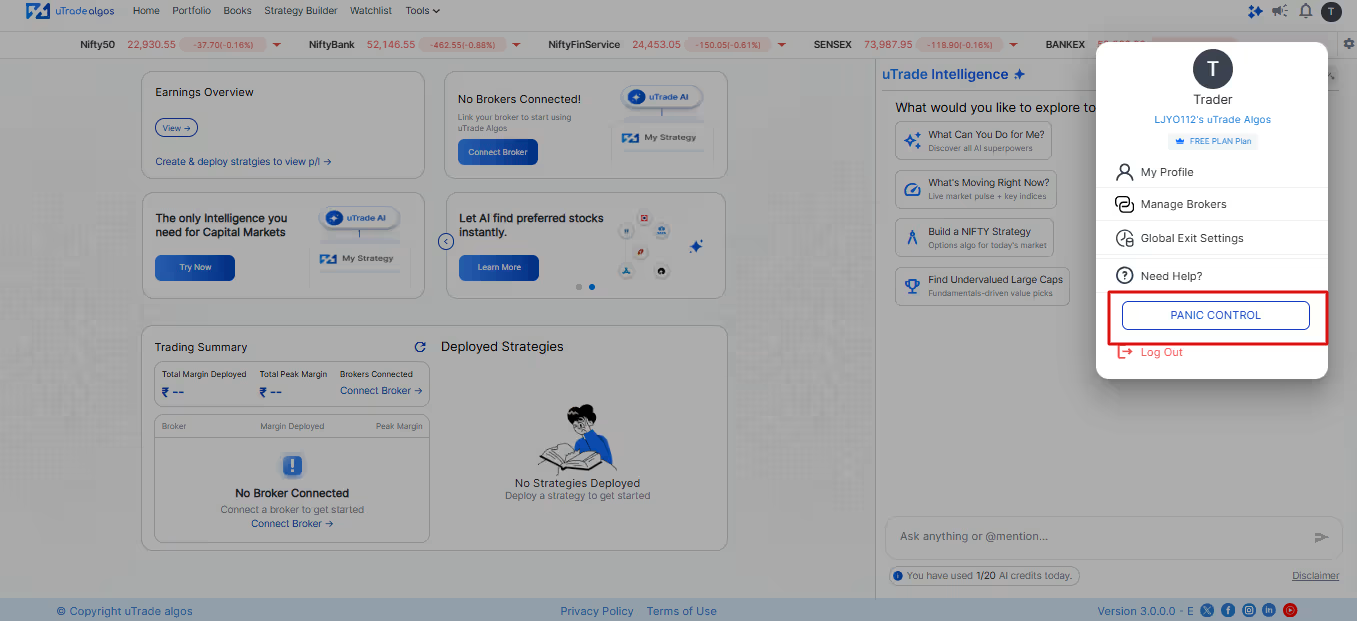
In a single click, you can pause all running strategies or shut them down completely.
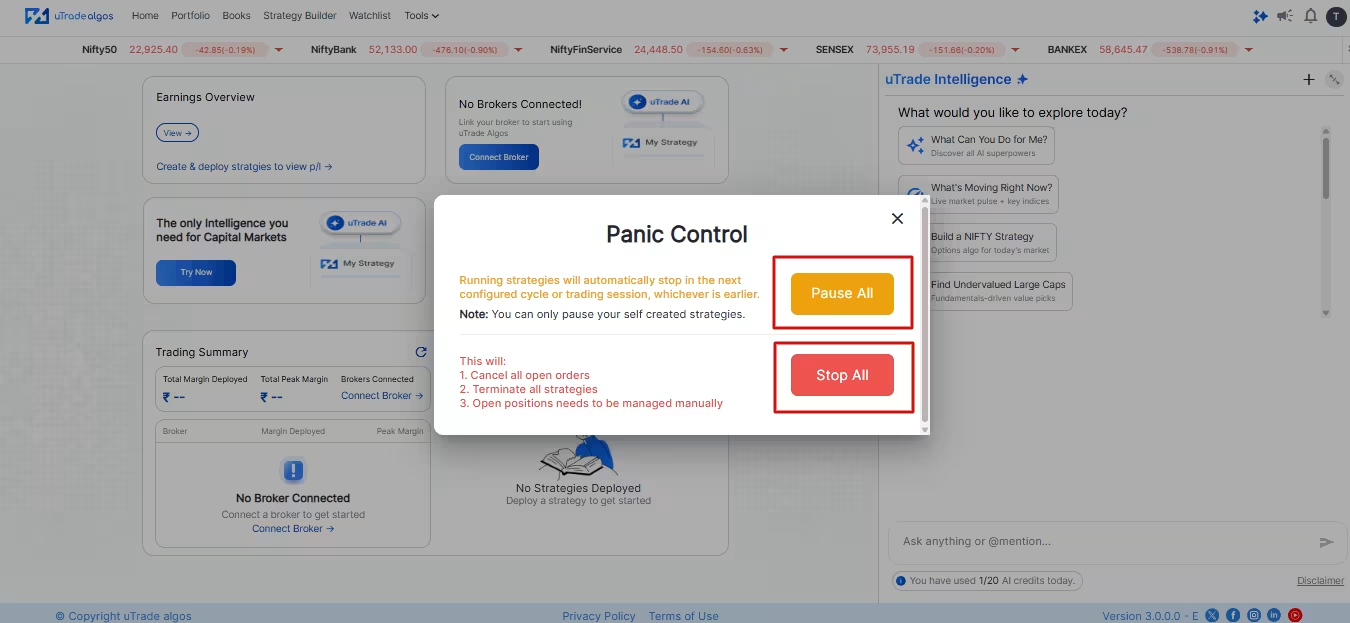
Reminder: Even the best strategy needs a human check on extreme market days. Having a kill switch is not a weakness — it is smart trading.
Suggested Reading: Analysing the Performance of Algorithmic Trading Strategies
Special Days Your Algo Must Be Ready For
Some days, the index behaves completely differently. Know these in advance:
- Expiry days (Thursday for Nifty, Wednesday for Bank Nifty) — sharp swings, especially in the last hour.
- Budget day, RBI policy day, election results — index can move 3–5% in one session.
- Global events — US Fed announcements, crude oil shocks, geopolitical news.
Suggested Reading: Why Algo Strategies Are Suitable for Different Market Conditions
Conclusion
When your algo is running, it is taking trades automatically. But the market (index) is always changing in the background. So your job is to keep an eye on the overall market direction while your algo is working.
Tracking index movements while running algo strategies is not complicated. It comes down to one thing — giving your algo the context it needs to make smarter decisions. Watch the index. Know the environment. Build simple index-based rules into your strategy. And always have a kill switch.
Your algo handles the execution. Your job is to make sure it's operating in the right conditions to do so.
Frequently Asked Questions (FAQs)
I need to watch the index manually while my algo is running?
Not every second — but you should have a quick glance at VIX, index direction, and your algo's trade count at regular intervals. Ideally, build index conditions into the algo itself so it self-adjusts.
What is the single most important thing to track on the index intraday?
VWAP. If the index is above VWAP, the intraday tone is bullish. Below VWAP, it's bearish. Most professional traders use this as their primary intraday filter.
How does India VIX affect my running algo strategy?
When VIX rises sharply, market moves become wider and less predictable. Strategies with tight stop losses or fixed targets often get hit repeatedly. A simple rule — reduce size or pause when VIX crosses your threshold.
Should I stop my algo on event days like budget or RBI policy?
Many experienced traders do — or they run with much smaller position sizes. Event days have index behaviour that no backtest can fully prepare for. Protecting capital on these days is more important than chasing profits.
Learn more: How to Backtest and Evaluate Spot Algorithmic Trading Systems
What happens to my algo if a market circuit breaker triggers?
Trading halts. Pending orders may get cancelled. When the market reopens, prices can gap. Your algo must have logic to handle this — either by cancelling open orders during a halt or by not re-entering immediately after the market resumes.





.svg)





