
Introduction
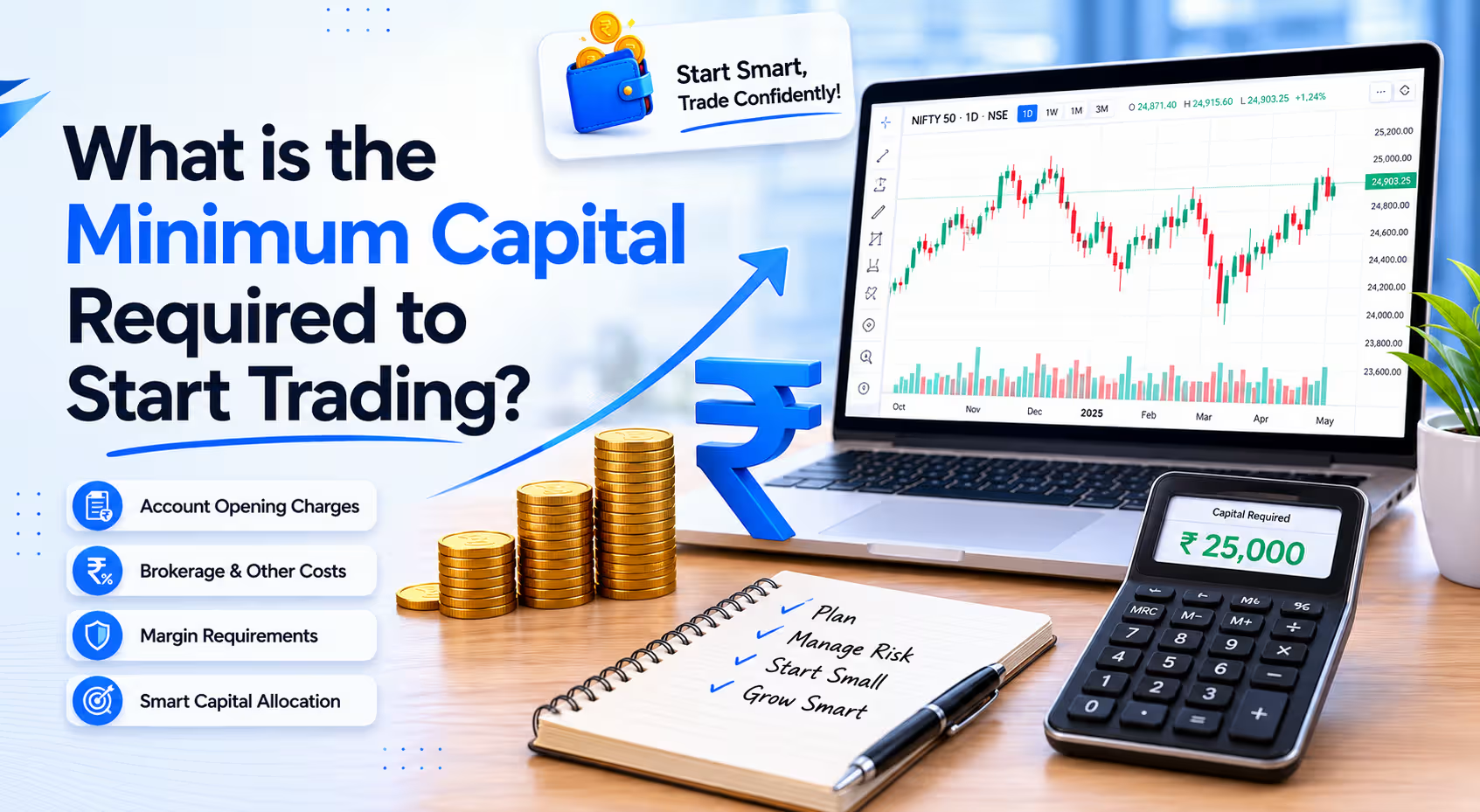
If you're wondering about the minimum capital required to start trading, the honest one-line answer is: you can technically start with as little as ₹100, but the right capital depends on your strategy, risk management, and goals—and platforms like uTrade Algos are making it easier than ever to start smart, even with limited funds.
The Real Question Isn’t “How Much?”—It’s “How Smart?”
Many beginners in India ask:
- How much capital do I need to start trading?
- Can I start trading with ₹100 or ₹2000?
The curiosity is valid. With social media showing big profits and fast money, it’s easy to assume you need either huge capital or none at all.
The truth lies somewhere in between.
Trading isn’t just about entering the market—it’s about surviving, learning, and growing your capital over time. And that’s where understanding the minimum capital required for trading in India becomes important.
What Does “Minimum Capital” Actually Mean?
The term minimum capital to trade can be confusing because there is no fixed number mandated for all traders.
Instead, it depends on:
- The market segment (equity, intraday, options, crypto)
- Your trading style (short-term, long-term, automated)
- Your risk appetite
- Your broker’s margin requirements
So instead of asking “What’s the minimum?”, a better question is:
“What is the minimum capital required to trade effectively and sustainably?”
Suggested Reading:
How much money do I need to start algo trading?
Minimum Capital Required for Trading in India (By Type)
Let’s break it down based on common trading styles.
1. Intraday Trading
Minimum capital to start intraday trading in India: ₹1,000 – ₹10,000
You can technically start small due to the margin (leverage) offered by brokers.
But here’s the reality:
- Low capital = limited position size
- Small profits = quickly eaten by brokerage and charges
- Higher emotional pressure
Example:
If you start with ₹2,000, even a 2% gain gives you ₹40—after charges, it may barely be meaningful.
So while the minimum money to start day trading is low, sustainability requires more.
In this episode, Vibhore Gupta, an options trader with over 14 years of experience in the markets, explains the key concepts of volatility that every trader should understand.
2. Swing Trading
Minimum capital to start swing trading: ₹5,000 – ₹25,000+
Swing trading involves holding stocks for days or weeks.
Benefits:
- No need for high leverage
- Lower stress compared to intraday
- Better suited for beginners
Example:
With ₹10,000, you can diversify across 2–3 stocks and manage risk better.
This is often a practical starting point for beginners.
3. Options Trading
Minimum capital to start option trading: ₹5,000 – ₹50,000+
Options are attractive because:
- They offer leverage
- You can start with relatively small capital
But they come with high risk.
Example:
Buying one lot of options may cost ₹2,000–₹10,000 depending on the premium.
The minimum money to start option trading is low, but understanding risk is critical.
4. Crypto Trading
Minimum capital to start crypto trading: ₹100 – ₹1,000+
Crypto exchanges allow fractional investing.
Example:
You can buy Bitcoin or Ethereum worth ₹100.
However, volatility is high, so risk management is still key.
5. Delivery (Long-Term Investing)
Minimum capital trading (delivery): ₹500+
This is the simplest way to start:
- No leverage
- No time pressure
- Ideal for beginners
You can buy shares of companies based on your budget.
Suggested Reading:
How much capital is required to deploy a strategy?
Can You Really Start Trading With ₹100 or ₹2,000?
Yes, technically. But let's be real about what that means.
Can I start trading with 100 rupees?
You can open a position — but it won't teach you much, because the outcomes are almost entirely random at that scale. You can't practise risk management meaningfully, you can't hold a diversified position, and you can't absorb even a single moderate loss.
Can I start trading with 2,000 rupees?
A bit more workable, especially in crypto or for buying a single option contract. But again, this is better suited to learning the mechanics of the platform than actual profit-driven trading. Think of it as a simulation with real money.
The point isn't that small capital is wrong — it's that you need to match your expectations to your capital size. Low capital = learning phase. Treat it that way.
Suggested Reading:
Do I need a lot of capital to start algorithmic trading?
But remember: this is more about learning, not earning.
There's No Universal "Right" Number — And Here's Why
When people ask "How much capital do I need to start trading?", they're usually hoping for a clean, confident answer like "₹10,000" or "₹1 lakh." But trading doesn't work that way, because the right capital depends on:
- What you want to trade (stocks, options, futures, crypto, intraday, swing?)
- Your experience level (are you just starting out or do you have a few years behind you?)
algo - Your risk tolerance (how much loss can you handle without it affecting your sleep or your household budget?)
- Your financial situation (is this money you can genuinely afford to risk, or is it part of your emergency fund?)
What Should You Consider Before Deciding Your Capital?
Instead of a fixed number, ask yourself these:
1. What is my risk tolerance?
Can you handle losing 5–10% of your capital?
If not, start small.
2. What is my trading style?
- Intraday → Needs active monitoring
- Swing → Needs patience
- Options → Needs knowledge
3. Can I manage risk properly?
A simple rule:
Never risk more than 1–2% of your capital per trade
Example:
If you have ₹10,000, risk only ₹100–₹200 per trade.
4. Am I emotionally prepared?
Small capital often leads to:
- Overtrading
- Revenge trading
- Impulsive decisions
Common Mistakes Beginners Make
The common mistakes newbies make while starting their trading journey:
Starting Too Small and Expecting Big Returns
Low capital + high expectations = frustration
Using Full Capital in One Trade
This increases the risk of wiping out your account.
Ignoring Charges and Slippage
Brokerage, taxes, and slippage can eat into small profits.
Trading Without a Strategy
Random trading leads to consistent losses.
How Technology is Changing the Game for Retail Traders
Today, trading is no longer limited to experts.
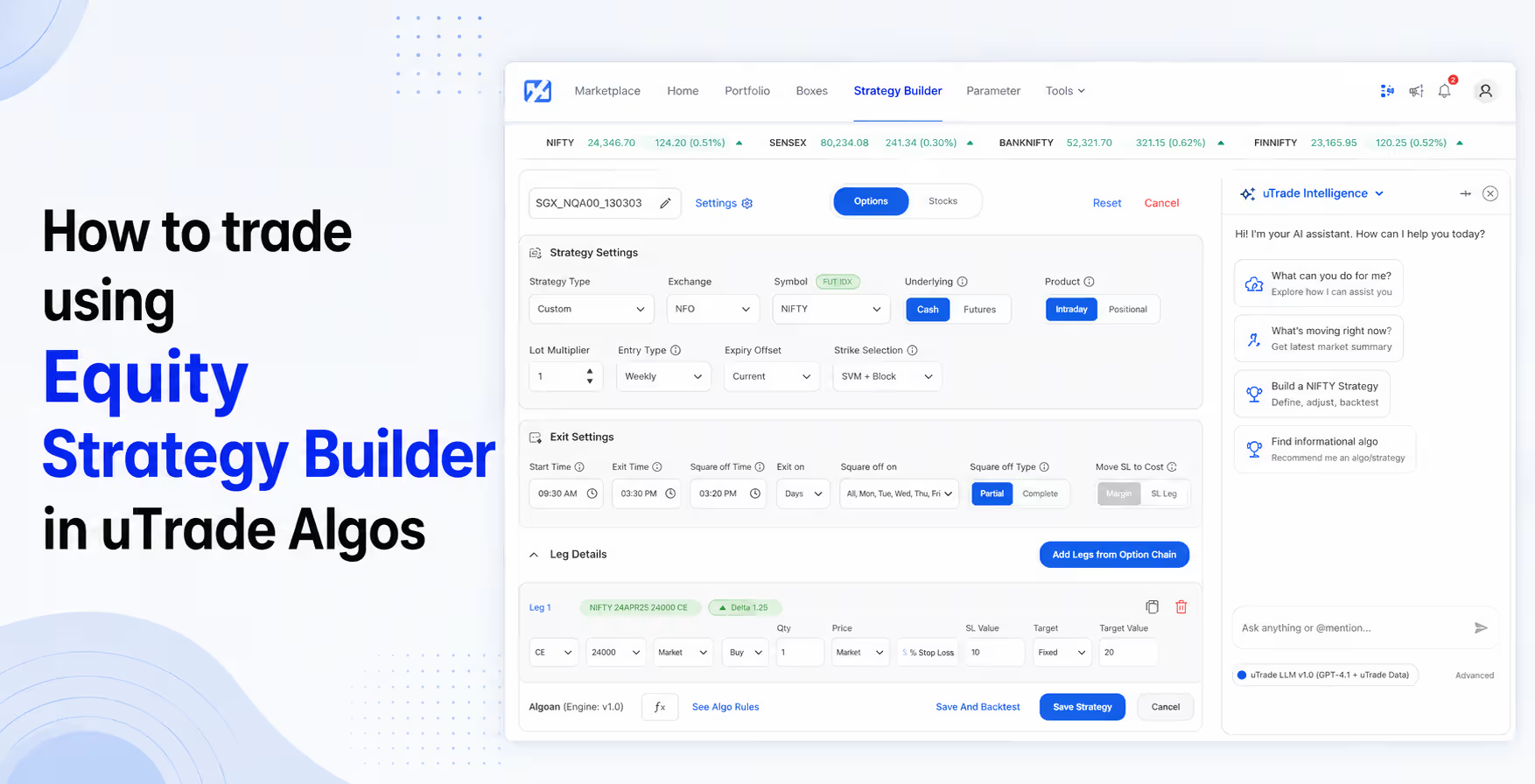
Platforms like uTrade Algos are helping bridge the gap by offering:
- Pre-built strategies for beginners
- Strategy creation tools for advanced users
- AI-powered insights (uTrade Intelligence)
- Easy execution without coding knowledge
This means even if your minimum capital to trade is small, your approach can still be smart and structured.
A Smarter Approach to Starting Small
Let’s say you have ₹5,000.
Here’s a practical way to approach:
- Use ₹3,000 for actual trading
- Keep ₹2,000 as backup
- Risk only ₹50–₹100 per trade
- Focus on learning, not earning
And if you’re using tools like uTrade Algos:
- Start with pre-built strategies
- Observe performance
- Gradually scale capital
You don’t need big money—you need a structured process.
Conclusion
The honest answer to "what is the minimum capital required to start trading?" is this: enough to learn without destroying yourself, but only when paired with a strategy, a risk plan, and realistic expectations.
There is no magic number. ₹5,000 can be too much for someone with no plan. ₹5 lakhs can be too little for someone trading high-margin futures without discipline.
Start by understanding your segment, your risk tolerance, and your current experience level. Then choose a capital amount that fits those realities — not one driven by FOMO or someone else's success story.
Trade smart. Stay disciplined. And let the tools available today — like algo platforms that bring structure to your trading — do some of the heavy lifting.
Frequently Asked Questions (FAQs)
What is the minimum capital required to start trading in India?
There's no fixed minimum mandated for most retail segments. For intraday equity, you can start with as little as ₹5,000–₹10,000, though ₹25,000–₹50,000 gives you more practical room. For options, ₹25,000–₹50,000 is a more functional starting point. Futures trading generally requires ₹1 lakh or more due to margin requirements.
How much capital do I need to trade profitably?
Profitability depends more on strategy and discipline than capital. Even large capital can lead to losses without proper planning.
How Much Capital Do I Need to Start Intraday Trading in India?
You can start intraday trading in India with as little as ₹5,000 to ₹10,000, though a safer beginner range is ₹25,000–₹50,000 to better manage risk and comfortably handle transaction costs.
While some brokers technically allow you to place trades with even ₹100–₹1,000, such small capital often limits your ability to trade effectively. With a slightly higher amount, you can take advantage of leverage (usually 3x to 5x in equity intraday trading), which increases your buying power.
Is ₹1 lakh enough to start trading options?
₹1 lakh is a workable starting point for options trading, especially for buying strategies or simple spreads. It gives you enough room to size positions correctly, absorb some losses, and not get wiped out by a single bad trade. However, you still need a defined strategy and risk rules.
How does algo trading help retail traders with limited capital?
Algo trading removes emotional decision-making, enforces pre-defined entry/exit rules, and allows you to backtest strategies before risking real money. Platforms like uTrade Algos make this accessible to retail traders at any capital level — giving you institutional-grade discipline without needing institutional-level capital.
Disclaimer: Trading involves financial risk. The information in this article is for educational purposes only and does not constitute financial advice. Always consult a registered financial advisor before making investment decisions.
.avif)
.avif)



.svg)





